Web · React
Super Admin live estate board and Hospital Admin vitals, alerts, and care teams — desktop in telemetry and laptop in clinic.
ShippedConnected vitals from wearable and bedside IoT devices — one live picture for Super Admin, hospital care teams, and the patient. Alerts fire when readings leave the safe range. Data moves securely from the ward, the home, the clinic, and rehab gym into the cloud.
What shipped: React web consoles for Super Admin and Hospital Admin, plus native iOS and Android apps for the patient (My Devices, pairing, alerts). Same Go API, vendor SDKs, and MQTT bus on every platform.
Care teams work on the web. Patients pair kit and read vitals on the phone they already have. API, SDK, and MQTT are the same on every platform.
Super Admin live estate board and Hospital Admin vitals, alerts, and care teams — desktop in telemetry and laptop in clinic.
ShippedNative patient app: My Devices, Withings / iHealth / Dexcom pairing via official SDKs, push when a reading is out of range.
ShippedNative patient app with the same My Devices list and kit pairing. Bluetooth and vendor SDKs on the phone; alerts through the Go API.
ShippedBedside monitors stayed in the ward. Wearables stayed on the wrist. Home BP cuffs produced paper printouts or a phone photo in a WhatsApp group. Clinic visits were the only moment anyone compared numbers. When SpO2 dropped at 2 a.m., nobody saw it until morning rounds — or a readmission.
Every reading still checks patient identity, device ownership, and alert thresholds in Go. React only shows what that role is allowed to see.
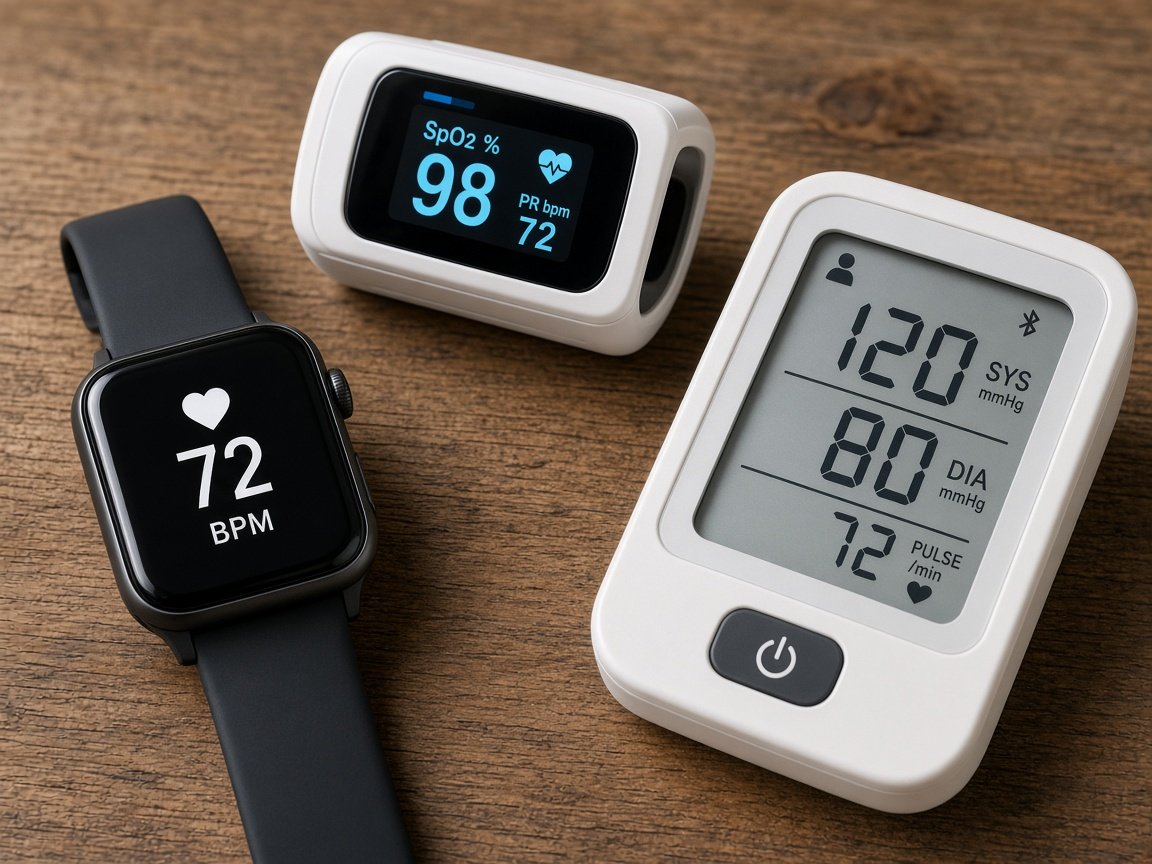
Wrist HR, SpO2 probe, BP cuff, scale, and ward monitors. Each device is enrolled to one patient and publishes on MQTT.
Thresholds belong to the hospital. Tachycardia, desaturation, or a silent device pages the care team — not a spreadsheet the next day.
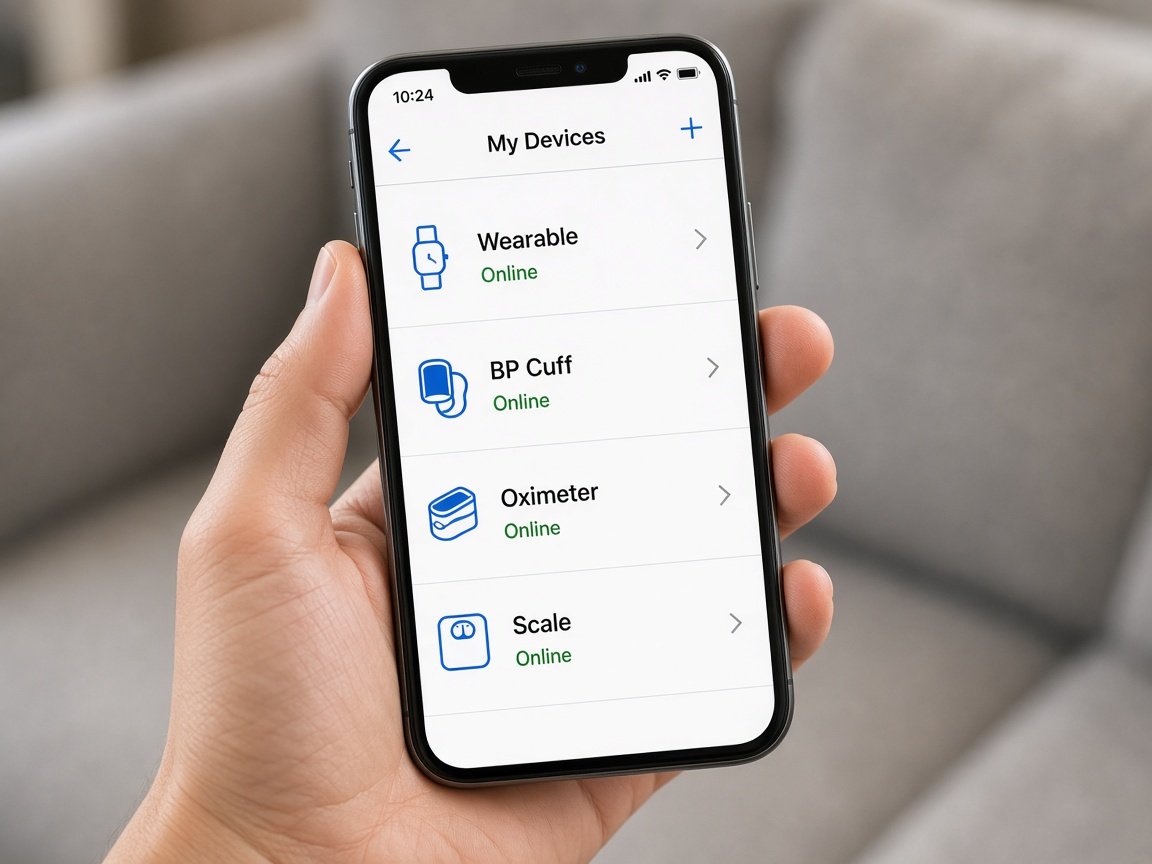
The user panel lists only their kit: wearable, cuff, oximeter, scale, bedside monitor — online or needs pairing.
The same MQTT topic design is used in the ward, at home, in clinic, and in a rehab gym. Policy decides who sees which patient.
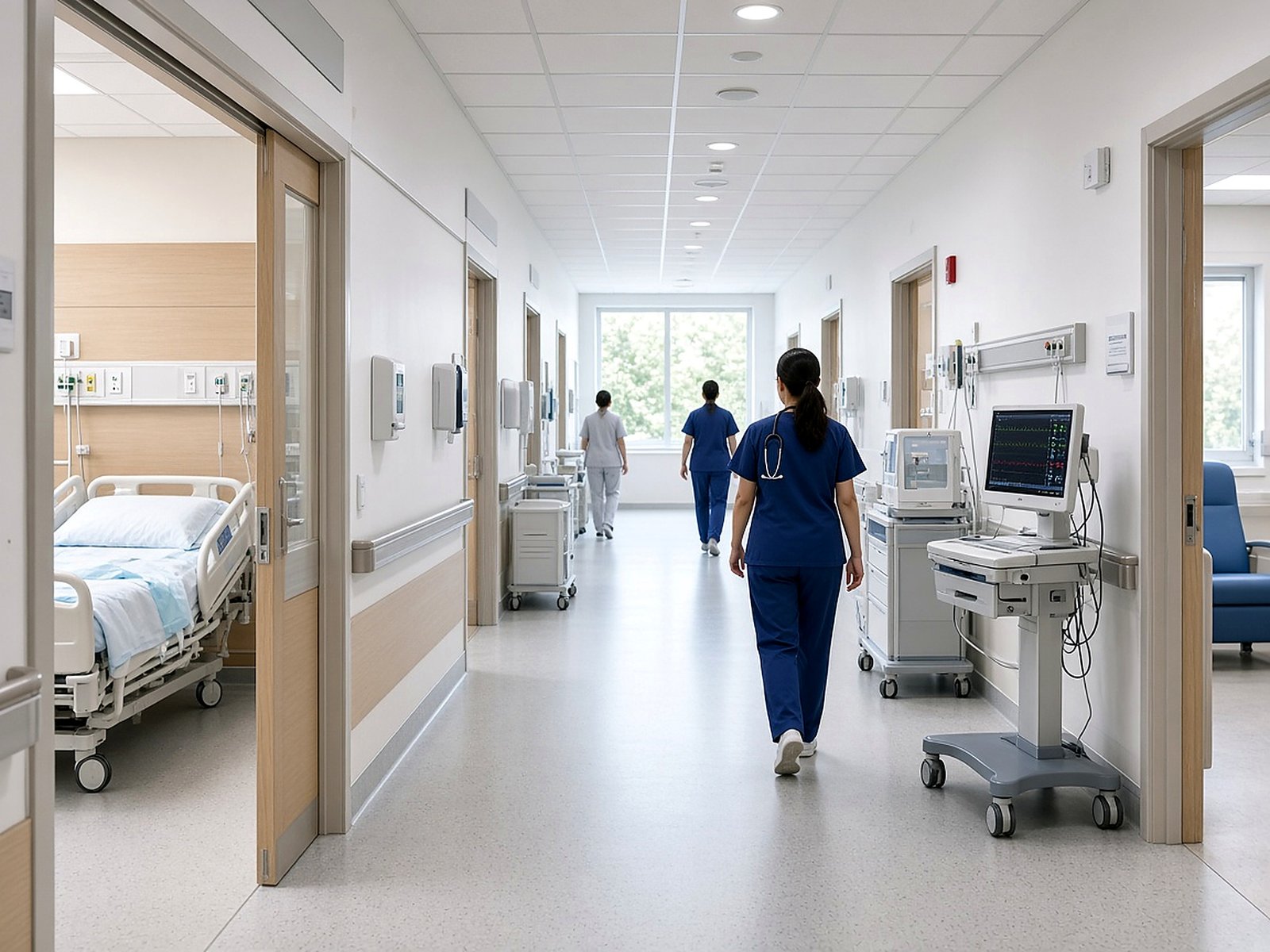 Hospital ward
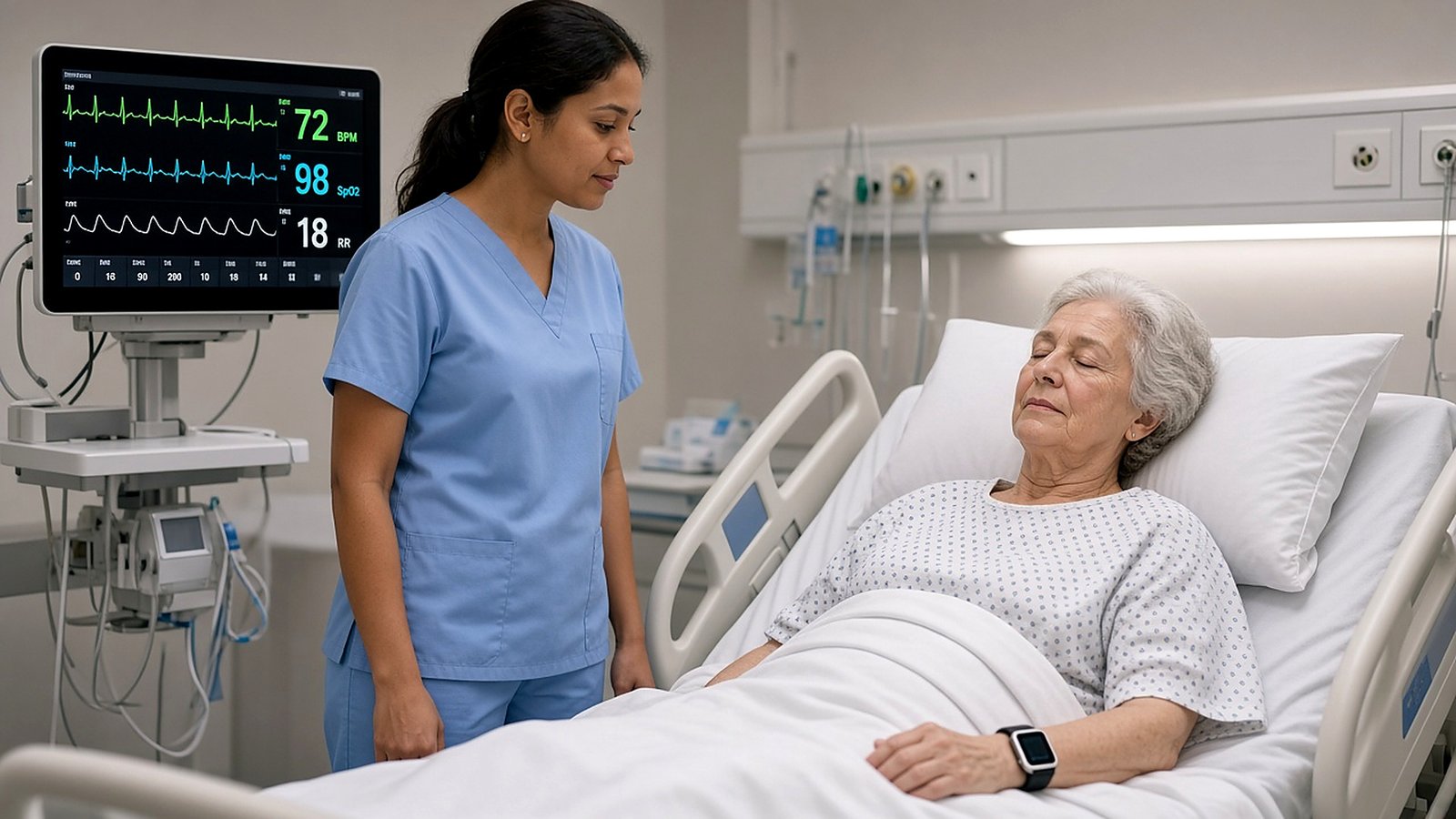
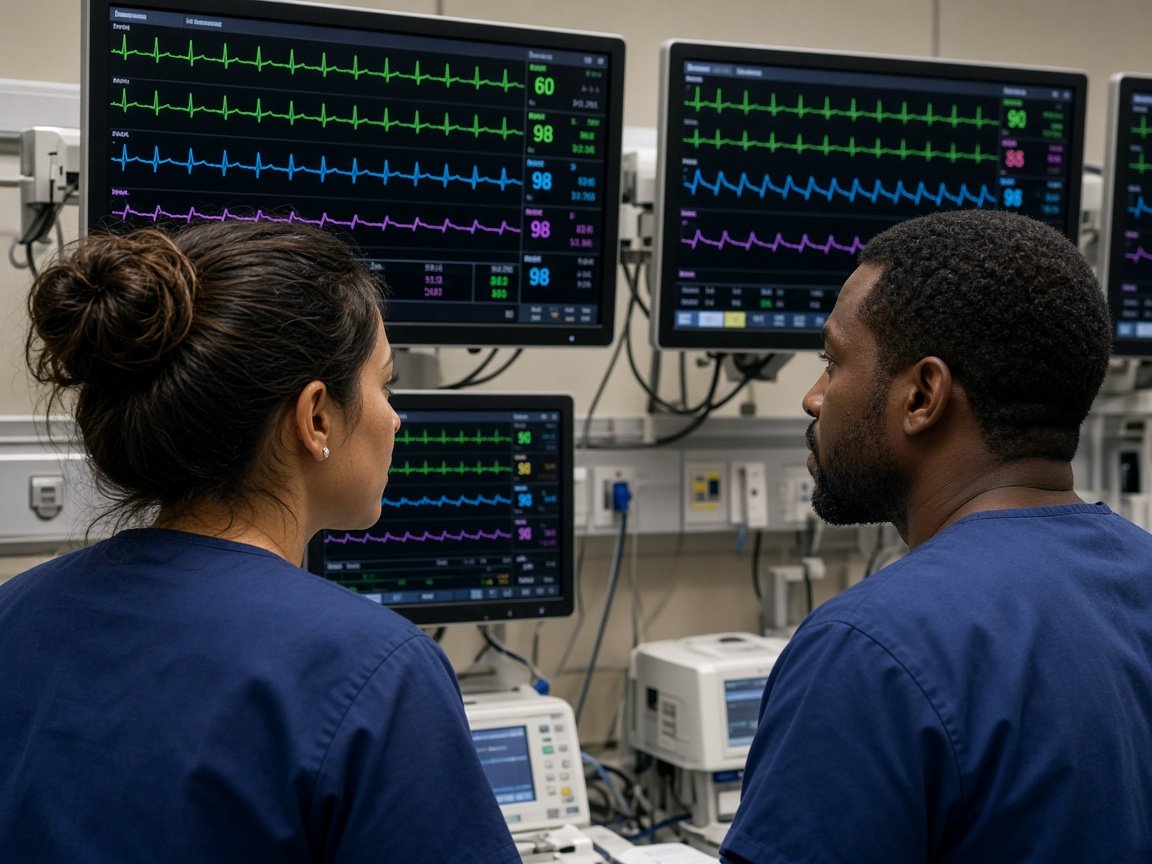
ECG, SpO2, and NIBP from the bed flow into the same live board as home devices after discharge. Super Admin sees which wards have silent monitors. Hospital Admin assigns the night telemetry team.
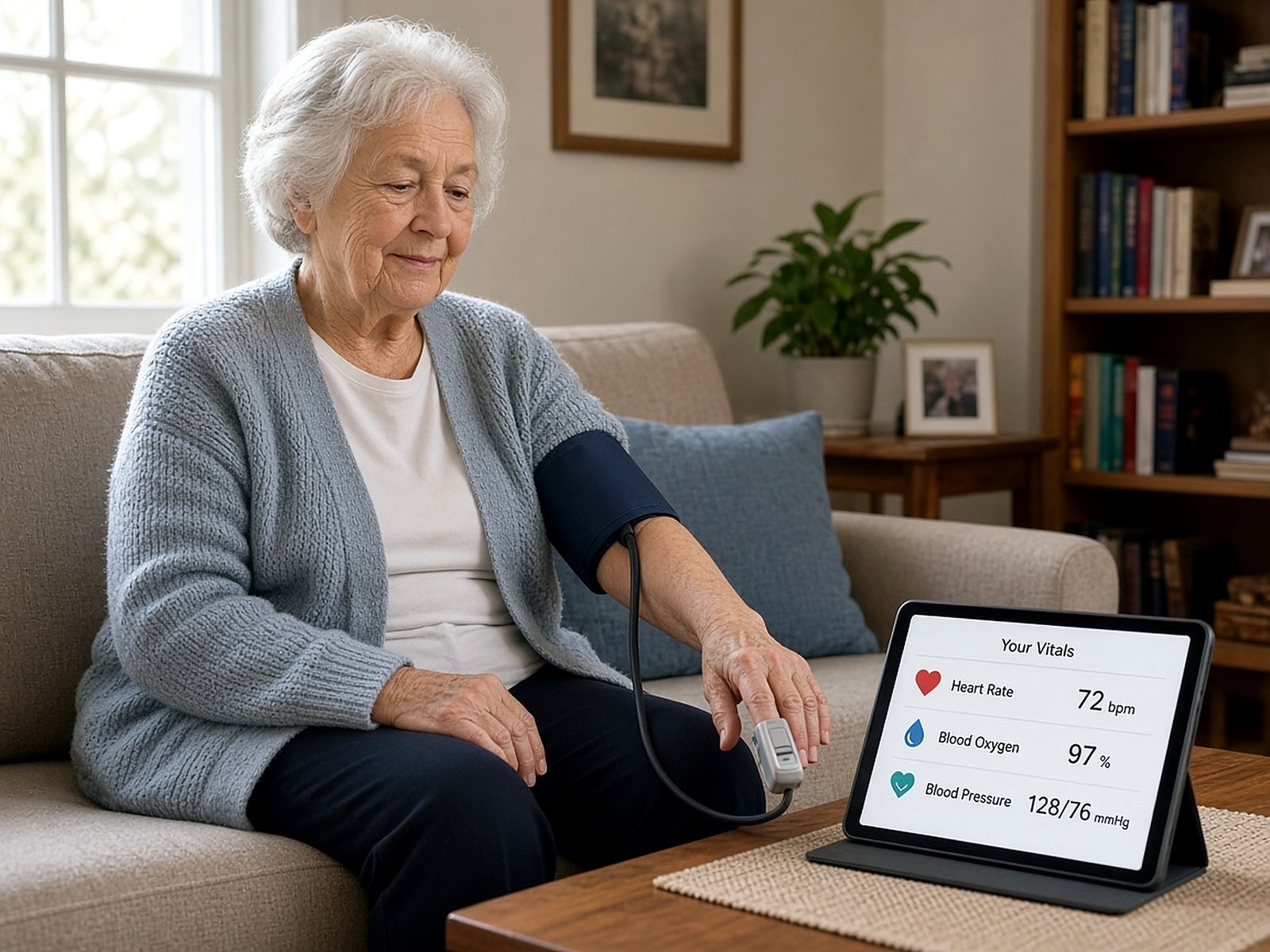 Home
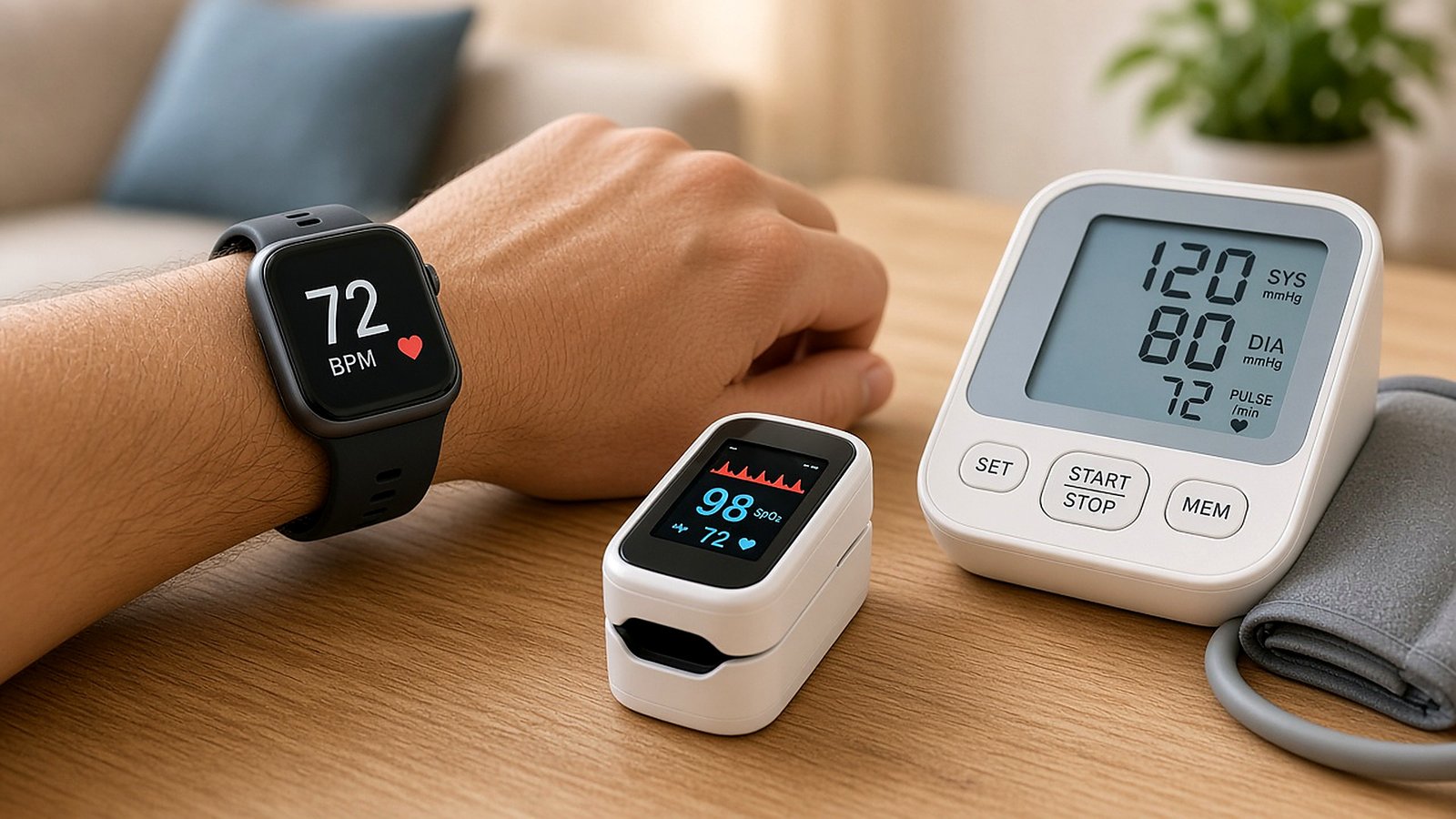
Cuff, oximeter, and wearable stay with the patient. Missed readings and out-of-range BP alert the clinic without a phone tree. The patient’s My Devices list shows what is still sending.
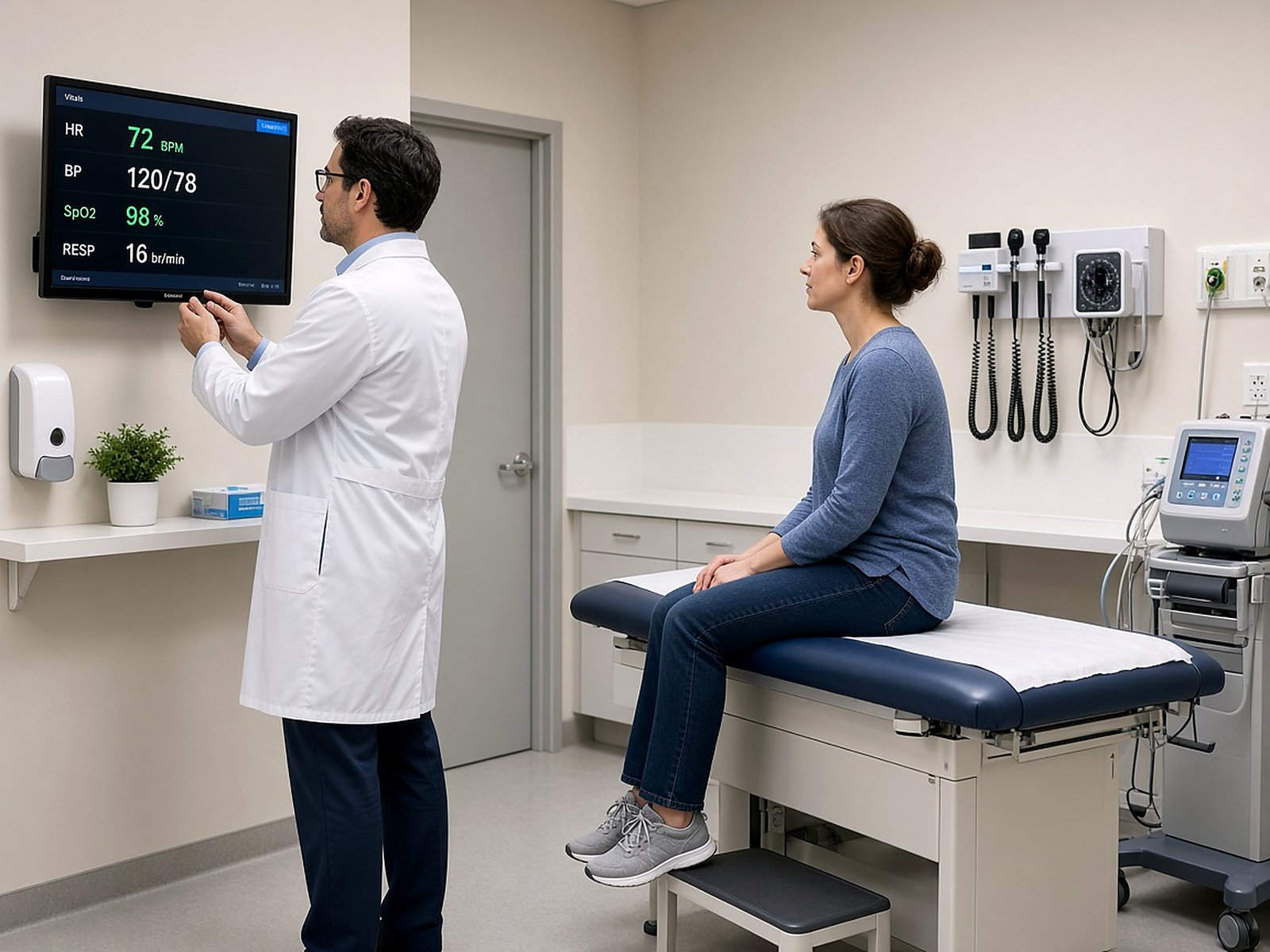 Clinic
The exam-room reading is not a one-off. It joins the home trend so the clinician sees the week, not only today’s number. Hospital Admin sets which care team owns the panel.
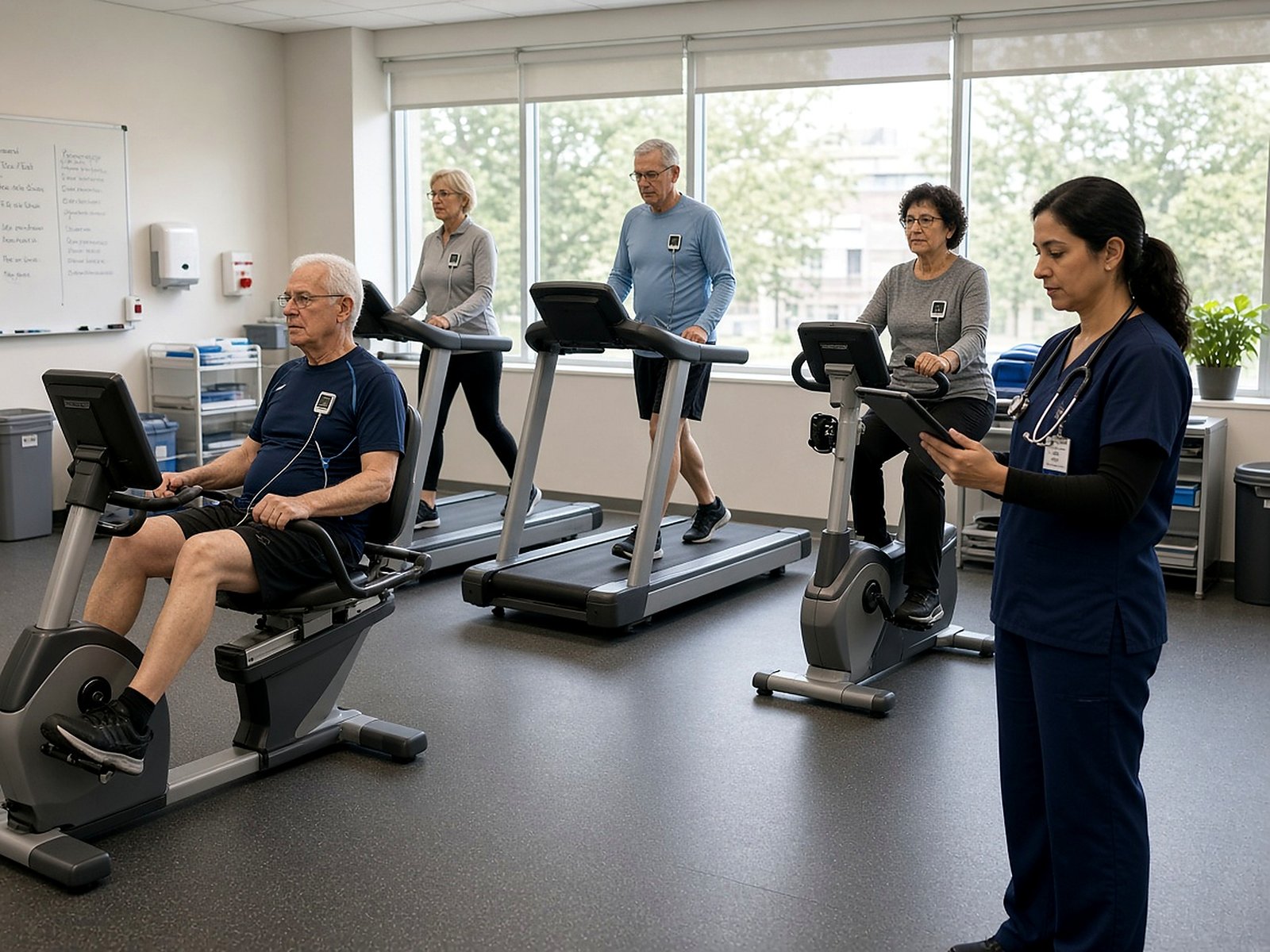 Rehab gym
Wearables during treadmill and bike sessions stream HR into the same patient record. Therapists watch a tablet; Super Admin still sees device online rates for the gym floor.
Switch roles. Super Admin watches the estate. Hospital Admin runs one site’s patients and alerts. Patients only see their own devices.
Control tower for every hospital on the platform. Super Admin sees device fleets, MQTT connectivity, and critical alerts across sites. They do not set a single patient’s BP threshold — that stays with Hospital Admin.
React dashboard · MQTT from the device · Go alert engine.
| Time | Site | Event | Status |
|---|---|---|---|
| 10:24:31 | Ward 4 | SpO2 88% | Alert |
| 10:24:18 | Home | BP 128/82 | In range |
| 10:23:47 | Rehab gym | HR 118 | Session |
| 10:23:11 | Clinic | Wearable silent | Offline |
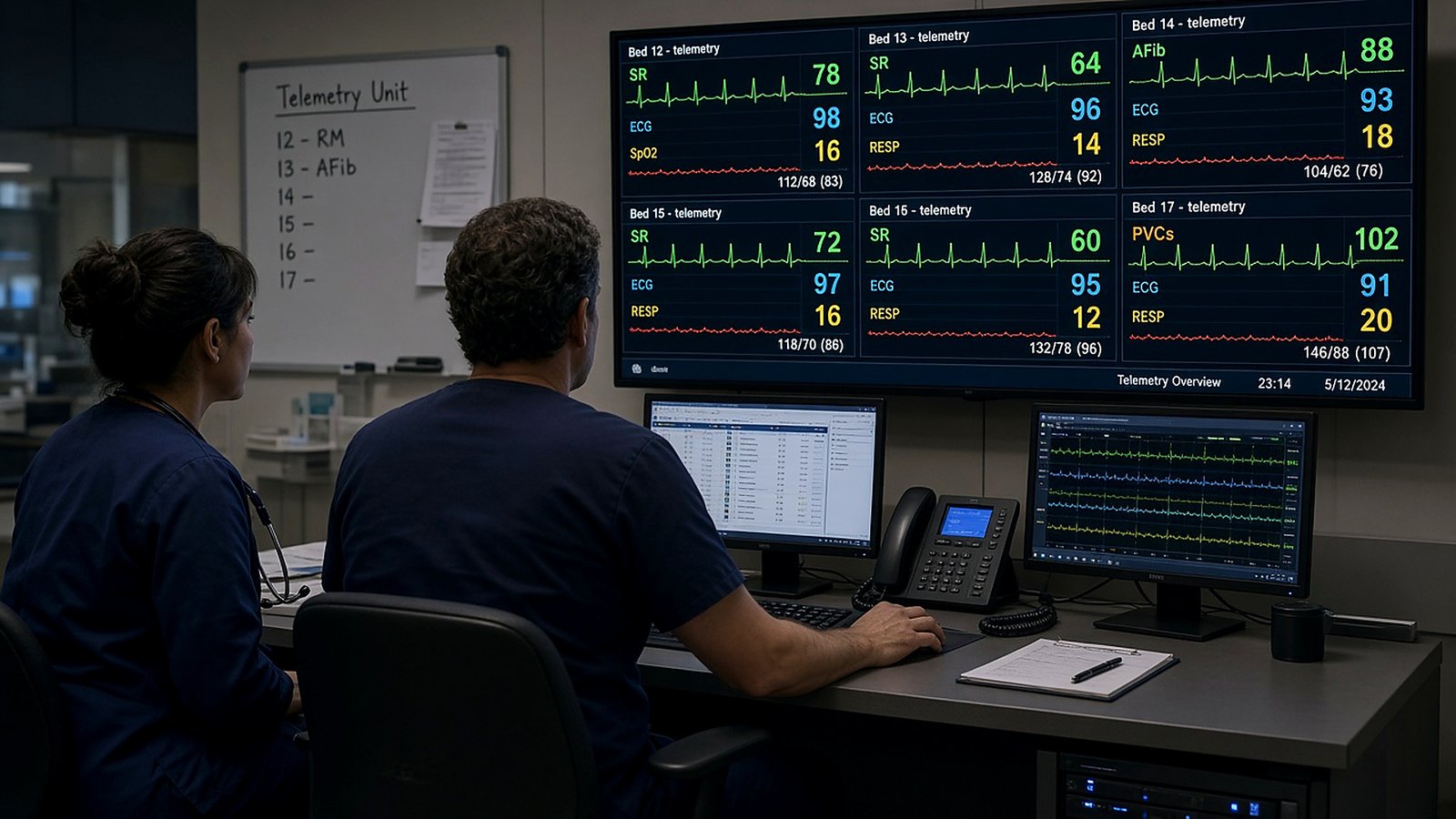
Day-to-day operators for one hospital or clinic. They enroll patients, attach devices, set HR/SpO2/BP rules, and watch who is out of range this hour. They never see another hospital’s census.
If a wearable goes silent, the hospital board flags it before the next visit.
| Patient | Device | Last reading | Team |
|---|---|---|---|
| M. Patel | Oximeter | SpO2 88% | Night telemetry |
| A. Khan | Wearable | HR 72 | Cardio clinic |
| R. Singh | BP cuff | 124/80 | Home RPM |
| L. Chen | Gym strap | HR 118 | Rehab |
Shipped for both iPhone and Android. Patients never see other hospitals. They open My Devices: Withings BPM, Scale, and Thermometer; iHealth BP and Pulse Oximeter; Dexcom CGM. Each row shows last reading and whether the API/MQTT link is live.
Good morning, Maya
6 devices · API · SDK · MQTT
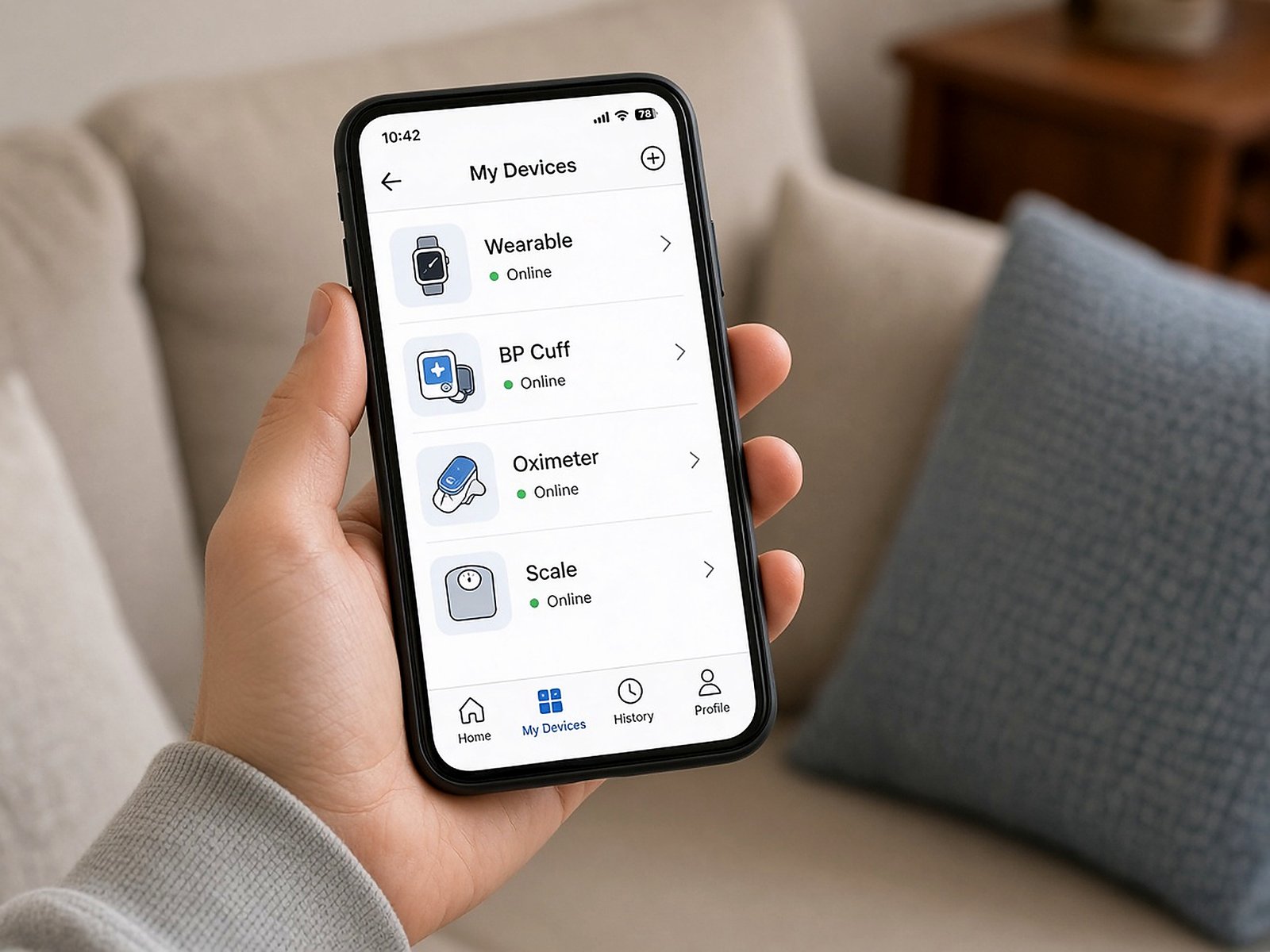
Withings BPM, Scale, or Thermometer; iHealth BP or Pulse Oximeter; Dexcom CGM — the SDK/API posts a reading, Go publishes it on MQTT.
The device publishes the packet over MQTT. Go checks patient, device ownership, and whether the reading is in range.
Out-of-range vitals or a silent device notify the assigned care team. In-range data still updates the trend.
The same event appears on Super Admin and Hospital Admin live boards, and on the patient’s device list.
Super Admin and Hospital Admin ship as React web. Patients use native iOS and Android apps (My Devices, pairing, push). The Go API is shared. Vendor SDKs on the phone talk to Withings, iHealth, and Dexcom; MQTT is the live bus for care-team boards.
Home kit is paired per patient: Withings BPM, Withings Scale, Withings Thermometer, iHealth BP monitor, iHealth Pulse Oximeter, and Dexcom CGM for glucose. Each device uses its official API or SDK. Go maps the payload onto a common vital model, then publishes on MQTT for the live boards.
If the patient closes the app, Withings and iHealth still sync when the device wakes; Dexcom CGM keeps streaming. The next time Hospital Admin opens the board, the feed is already there.
Super Admin and Hospital Admin consoles — live monitoring on desktop and laptop.
Native patient apps: My Devices, Bluetooth pairing, push alerts. Same Go API on both stores.
REST for consoles, webhooks from vendors, PHI-aware storage, and the command path to enroll or revoke a device.
Withings, iHealth, and Dexcom official SDKs for pairing, OAuth, and reading history — not reverse-engineered apps.
Normalized vitals published live: BP, weight, temperature, SpO2, CGM glucose, and device online status.
Withings BPM, Scale, Thermometer · iHealth BP monitor and Pulse Oximeter · Dexcom CGM — plus ward bedside MQTT where installed.
Ward monitors, home cuffs, clinic visits, and gym wearables land on the same patient timeline.
Hospital Admin sees desaturation and silent devices live — Super Admin sees estate health, not next-day PDFs.
My Devices ended “is the cuff even on?” calls. If it is not on the list, it is not sending.
We map Super Admin monitoring, Hospital Admin vitals boards, and a patient device list onto a React, Go, and MQTT platform care teams can run.